Carving Tools
Carving is the one branch of woodworking where the tool really does dictate the shape of the cut. A joiner can get by with a handful of chisels, but a carver builds up a collection of gouges whose curves match the forms they want to make, and the pleasure of the work comes largely from having the right sweep to hand at the right moment. The sections below break the subject down by tool type so you can find what you need without wading through the whole catalogue.
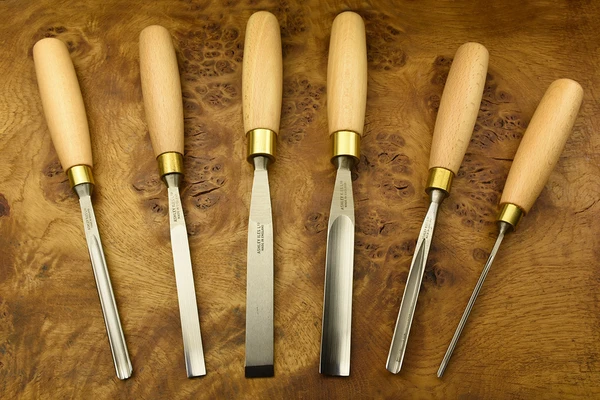
Gouges are the backbone of any carving kit. They are classified by sweep - the curvature of the cutting edge - using the Sheffield List numbering that has been in use since the nineteenth century. A No.1 is a flat chisel, a No.3 is a shallow curve for smoothing and modelling, a No.7 or No.8 scoops decisively, and a No.11 veiner cuts a deep, narrow trench. Width is quoted separately, so a 12mm No.5 and a 25mm No.5 share the same curve at different scales. Most carvers start with a spread of four or five sweeps and add to them as particular projects demand.
Beyond the straight gouges there are shapes designed to reach where a straight blade cannot:
- V-tools or parting tools cut a crisp angled groove, used for outlining a design, veining and lettering
- Fishtail gouges flare at the tip, letting you work into corners with good visibility of the cut
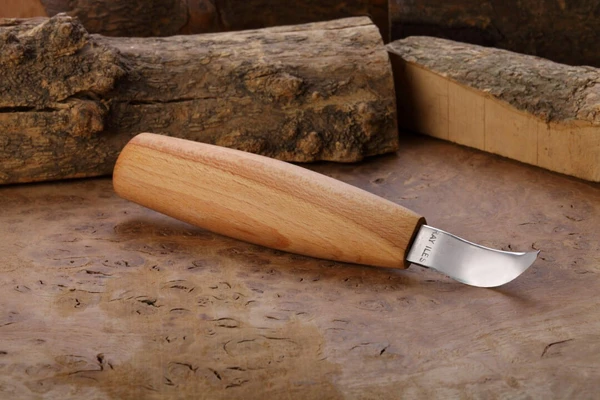
- Spoon bent and back bent tools curve along their length to work inside hollows and undercuts
- Palm and micro tools are short handled for close, seated work held entirely in one hand
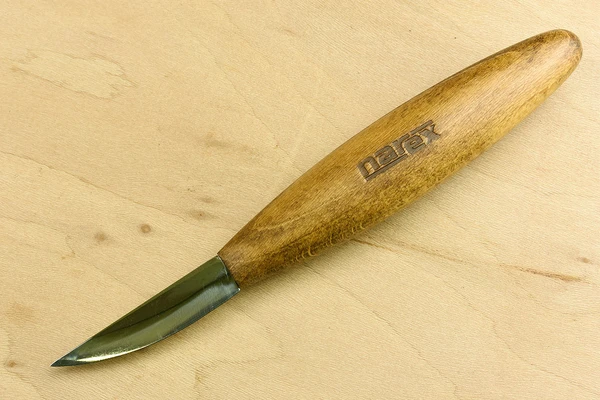
- Carving knives handle whittling, chip carving and detail work where a gouge is too blunt an instrument
Supporting all of this is the carver's mallet, traditionally round so it can strike from any angle without needing to be aligned, and a sharpening setup capable of dealing with curved edges - slipstones and shaped strops rather than the flat stones that serve a bench chisel. Carving tools are used at a very fine edge and are honed often, so it is worth getting this right early.
If you are starting out, a boxed set covers the common sweeps economically and tells you quickly which shapes you reach for most. From there, buying individually lets you build a kit that fits the carving you actually do.