
Japanese Hand Tools
Japanese hand tools represent one of the most rewarding areas of woodworking to explore - and one where the right guidance makes a genuine difference. The tradition is rooted in a different philosophy to western tooling: harder steels, finer geometries, and tools designed to be pulled rather than pushed. The pull-cut saw, the hollow-backed chisel, the laminated plane blade: each reflects a tradition of making that prioritises the edge above everything else.
At Workshop Heaven we have spent years building direct relationships with the Japanese makers and workshops behind the tools we stock, learning what distinguishes a good tool from a great one, which means we can we can help you find what you need, why it is worth owning and how to get the best from it.
Japanese tools reward the time you put into understanding them and that is as true of choosing the right tools as it is of learning to use them. We have done the groundwork on the selection side, and we are always happy to help with the rest. If you are unsure where to start or what to buy next, get in touch.
-
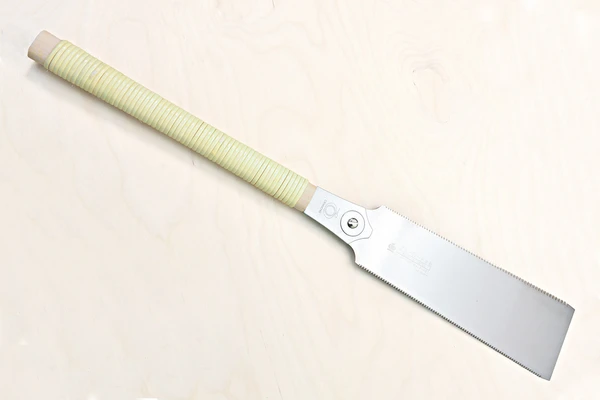
Japanese Saws & Blades
-
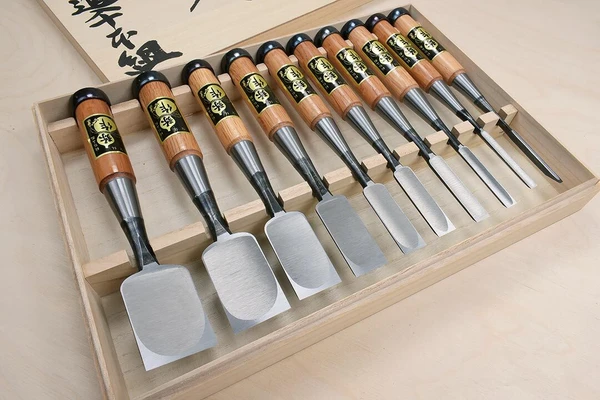
Japanese Chisels
-
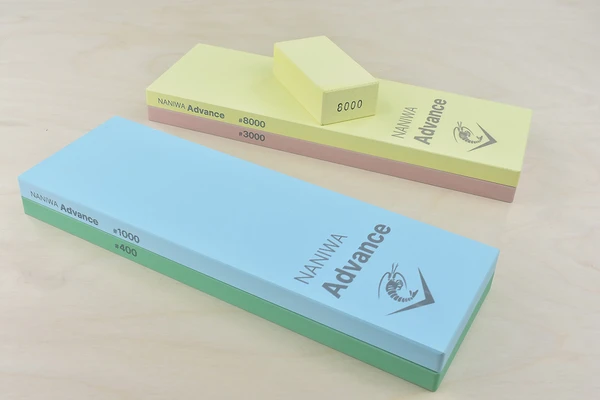
Japanese Sharpening
-
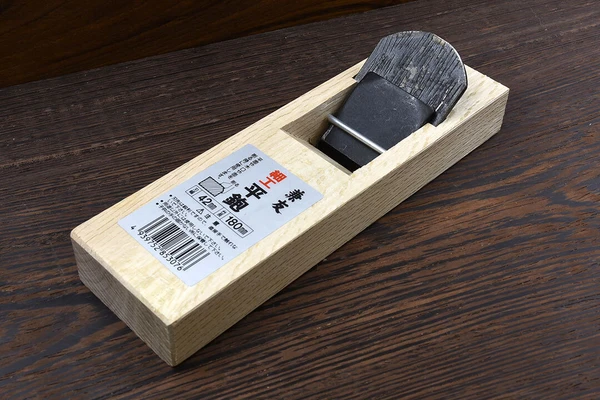
Japanese Hand Planes
-
Japanese Drill Bits
-
Japanese Rasps & Files
-
Japanese Knives
-
Japanese Marking & Measuring
-
Japanese Hammers
-
Japanese Green Woodworking
-
Japanese Scissors & Snips
-
Japanese Steel
-

View All Japanese Hand Tools
Saws (nokogiri) Japanese saws cut on the pull stroke, which keeps the blade in tension and allows for a much thinner plate than a western push saw. The result is a finer kerf, less resistance and cleaner cuts with noticeably less effort than a western saw. Once you have used a good Japanese saw in hardwood, it is difficult to go back.
We stock the full range of types a serious woodworker is likely to need: ryoba (double-edged saws with rip teeth on one side and crosscut on the other, the most versatile starting point for most woodworkers), dozuki (fine back saws for joinery and precise work), kataba (backless saws that can cut deeper than a dozuki allows), azebiki (short, curved saws for starting cuts away from an edge) and flush-cutting saws for trimming dowels and pegs cleanly. Compact and folding saws are available for those who need a portable option, and replacement blades are stocked across most of the range. Within the ryoba category there are further distinctions worth knowing: Bluehard saws have a stiffer plate for greater accuracy in joinery work, Komame have finer teeth better suited to harder woods, and Seiun are the standard option for softwoods and milder hardwoods.
Chisels (nomi) Japanese chisels reward attention. The steel is harder than most western equivalents, the hollow-ground back makes preparation and maintenance quicker, and a well-kept set will outlast several generations of use. Our chisels are made by Fujikawa, a maker we know well and trust to deliver consistent quality at a price that reflects genuine craft rather than marketing.
The range covers the main patterns a bench woodworker will reach for: oire nomi bench chisels for general work and mallet use, umeki nomi dovetail chisels for getting into tight corners, kinari nomi paring chisels for precise hand-pressure work and uramau nomi gouges. Japanese chisels use a hard high-carbon steel laminated onto a softer iron body: a construction that allows the steel to be hardened far beyond what would be practical in a single-steel tool before it becomes too brittle to use. Sets represent significantly better value than buying individual chisels, and if you've already bought one or two from us, we're happy to credit those purchases against the price of a set.
Planes (kanna) Japanese planes are pulled towards the user rather than pushed, and work on a steeper blade angle. They take longer to learn than a western bench plane, but the surfaces they produce on difficult grain are genuinely difficult to match by other means. We have chosen our plane range carefully with the western woodworker in mind - makers and models that reward the learning curve without demanding the years of setup experience that some Japanese planes require.
We stock planes from two makers. Tsunesaburo, a third-generation family workshop from Miki city - Japan's historic centre of tool manufacture - make the bench planes we recommend for western woodworkers transitioning to Japanese planes for the first time. Their blades are laminated from blue paper steel onto soft iron and mounted in carefully seasoned white oak bodies, partially set up at the factory to reduce the work needed before first use. There is an excellent series of videos by Sumokun on YouTube that explains the setup process in English, and we are always happy to advise. For specialist joinery and profiling work, we also stock a range of Koyama planes - tools for woodworkers who have moved beyond flat surface preparation and want to explore what Japanese plane-making looks like when applied to more specific tasks. Between them, these makers provide a range that reflects the full breadth of what Japanese plane-making has developed over centuries for woodworkers who want to take the Japanese plane tradition beyond the basics.
Sharpening Sharp tools are not a luxury in Japanese woodworking - the geometry and steel hardness of the tools depend on it. Waterstones are the natural partner for Japanese steel: they cut fast, they dish gradually rather than glazing over, and the slurry they produce as they work actually contributes to the sharpening action rather than getting in the way. With the right progression of grits, a waterstone system produces edges that are genuinely difficult to match by any other method - and once established, the habit of maintaining that edge becomes second nature.
The waterstone range covers three makers: Naniwa, Suehiro and King Ice Bear - across a range of grits, from coarse stock removal through to fine finishing stones capable of producing edges that are difficult to match by any other method. Atoma diamond plates are the recommended choice for keeping your stones flat - an essential part of the waterstone system that is easy to overlook. Whether you're sharpening Japanese tools or western ones, a good waterstone setup is hard to argue against.
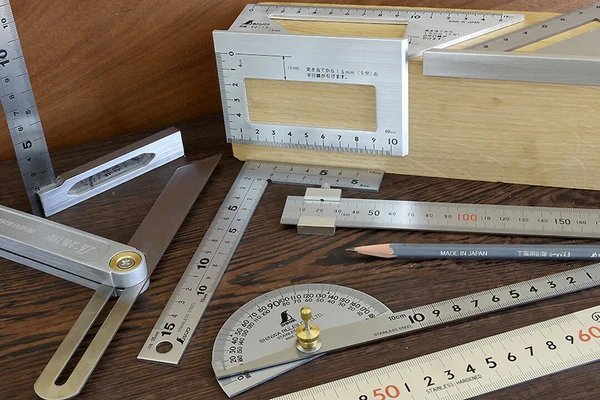
Marking and measuring Accurate layout is where good work begins, and Shinwa - Japan's leading manufacturer of precision marking and measuring tools - make instruments that take this seriously. The Shinwa range at Workshop Heaven is one of the most comprehensive collections of Japanese measuring and layout tools available in the UK, covering virtually every layout task a woodworker, joiner or cabinetmaker is likely to face.
Shinwa squares, rules and layout instruments are made to tight tolerances at prices that compare favourably with western equivalents. Reliable, consistent and well finished, Shinwa tools are built to consistent tolerances and priced to be used daily - not kept for special occasions.
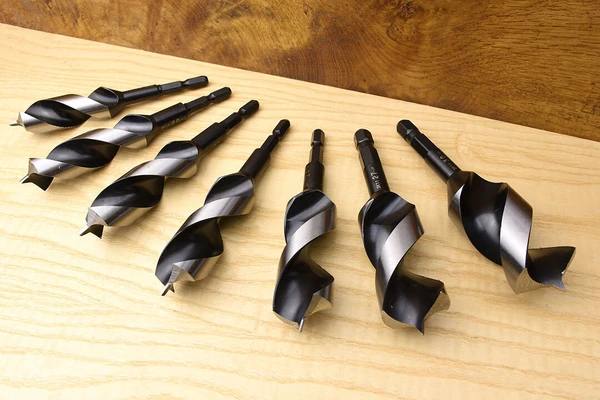
Drill bits Star-M are a Japanese specialist drill bit manufacturer with a strong reputation for precision and clean cutting in wood. We stock their range because it solves real problems that woodworkers encounter, and because the quality is consistent enough to recommend with confidence.
The range at Workshop Heaven covers two core bit types: the 601 precision drill bits, designed for tear-free holes in wood, leather and plastics using a hooked spur and curved cutting edge geometry; and the F-type auger bits, short non-self-feeding bits designed specifically for cordless drills, which reduce motor load, extend battery life and include a conical tip useful for reaming and reducing breakout on the exit side. Beyond the bits themselves, the range includes to drill extensions, stands and storage, making it straightforward to build a complete and considered workshop drilling setup.
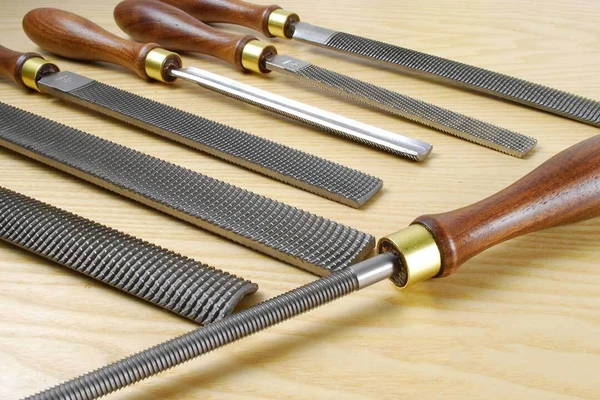
Rasps and files Good rasps and files are easy to underestimate until you use a poor one. The two makers we stock represent quite different approaches to the same problem - both worth knowing about.
Shinto saw rasps use a construction based on interlocking saw blades to create a surface that cuts aggressively but leaves a finish that needs surprisingly little cleaning up. Iwasaki carving files are hand-cut in Japan and occupy a different register entirely - fine, precise and particularly well suited to detailed carving and shaping work. Used together, they cover the full range of stock removal tasks from rough shaping through to surface refinement, and both represent the kind of tool that earns its place on the bench quickly.
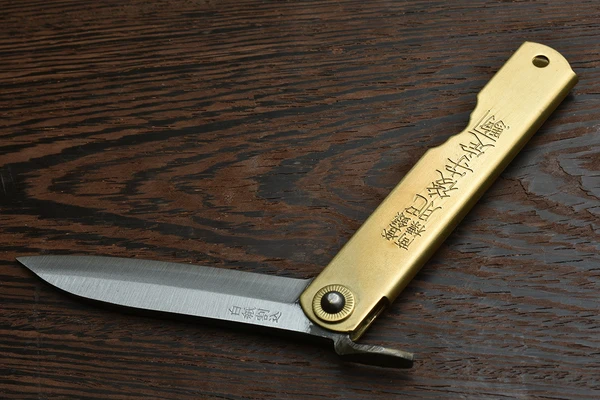
Knives Japanese knives for woodworking span a wider range of tasks than the western equivalent - from marking and cutting to carving and general craft use - and the blade geometry reflects that breadth. The single-bevel construction used in most Japanese knives produces an exceptionally keen edge and makes sharpening straightforward once the principle is understood.
The Higonokami folding knife is the natural starting point: a classic Japanese craft knife that has been made in Miki city for well over a century, affordable, practical and an excellent introduction to Japanese blade geometry. Beyond that, the range extends to dedicated marking knives for precise layout work and carving blades for those working in wood. All share the characteristic that makes Japanese edge tools worth seeking out — steel that takes and holds a finer edge than most western alternatives, and a simplicity of design that puts the focus entirely on what the tool is meant to do.
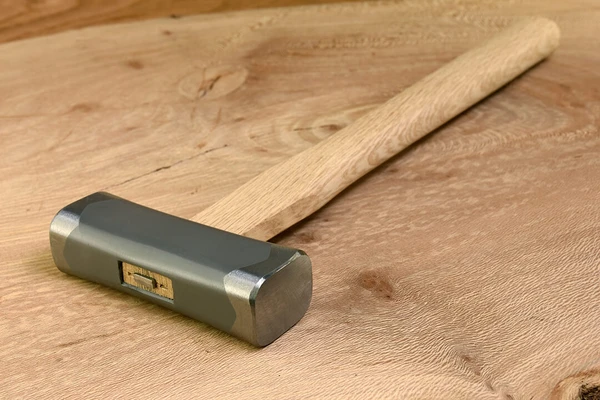
Hammers The hammer you use with Japanese chisels matters more than it might seem. Japanese chisel handles are designed around the weight and striking characteristics of a Japanese hammer — lighter and more precise than a western joiner's mallet — and using the wrong one can damage the handle over time, or simply make the work harder than it needs to be.
The Susa hammers we stock are made specifically for this purpose, with a weight and balance that suits the relatively short, controlled strikes that Japanese chisels respond to best. This is not a tool that announces itself - it is quiet, purposeful and exactly right for the job. If you have invested in a set of Fujikawa chisels, a Susa hammer is the correct companion for them. It is the kind of detail that distinguishes a considered toolkit from one assembled without thought, and it is the kind of thing we are here to help with.
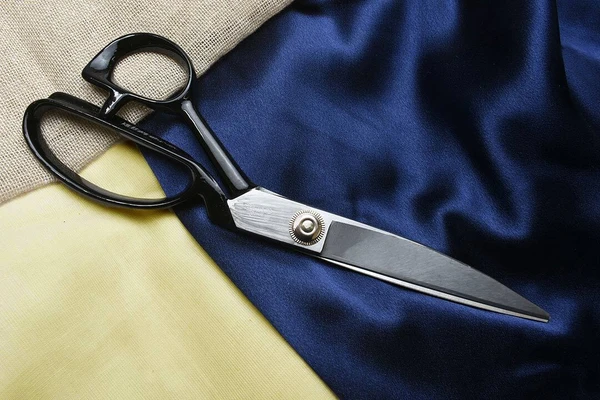
Scissors and snips Japanese scissors and snips are tools that tend to surprise people who encounter them for the first time - not because of what they look like, but because of how they feel in use. The edge quality and precision of the action are unlike anything produced at mass-market price points, and the difference is immediately apparent.
Tajika scissors are fully handmade from shirogami white paper steel - a labour-intensive construction where the time and skill involved is reflected honestly in the price. They hold an exceptional edge and the feel of a well-made Japanese scissor is genuinely unlike anything mass-produced. Doukan tailor scissors offer a more accessible entry point into the same tradition of Japanese scissor-making. The nigiri snips from Nigiri and Misuzu are individually hand-forged and work differently to conventional scissors: the blades are pinched directly between forefinger and thumb rather than operated by finger loops, which gives a level of tactile control and precision particularly valued in Japan for fine cutting, bonsai and topiary work. These scissors reward careful use and will last a very long time in the right hands.
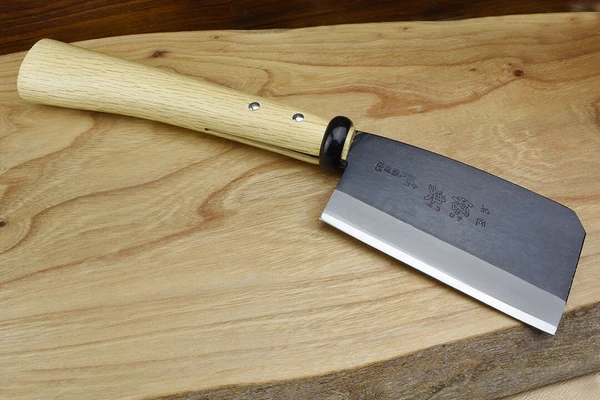
Green woodworking Japanese green woodworking tools bring the same rigour to field and forest work that the bench tool tradition applies to the workshop. The steels are hard, the edge geometry is considered, and the tools are built to be used hard rather than handled carefully.
The Kanenori nata is a traditional Japanese billhook with a laminated blade - a versatile heavy-duty edge tool used for splitting, chopping and general woodland work, available in two blade lengths. The Gyokucho CAST folding saws cover the cutting side of the work: robust, hardpoint folding saws in a range of tooth configurations (fine, medium, large and extra-large) suited to different materials and cutting speeds, including straight and curved blade formats and a multi-purpose version with a spare blade. The range extends to the Gyokucho Megumi usuba and Super Kenryu pruning saws for branch and tree work, the compact Plant Hunter Mini for lighter tasks, and Rakunandesu anvil pruning shears with replacement blades available. For heavier work, a small selection of Japanese axes covers splitting, forest, hatchet and carpenter's formats - all with the laminated construction typical of Japanese edge tools.
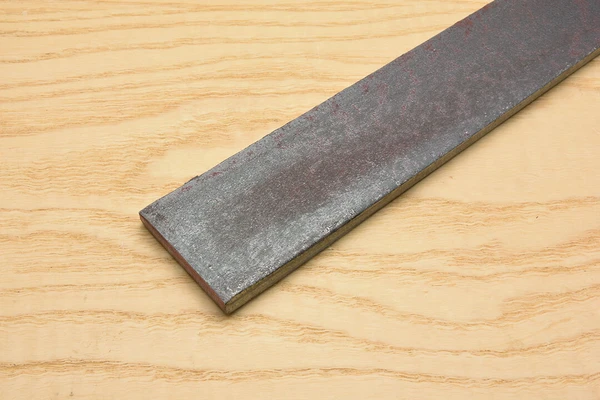
Japanese steel For those who make their own tools or blades, the steel you start with determines everything that follows. We stock a small but carefully chosen selection of Hitachi Yasuki — the high-carbon tool steels used by many of Japan's finest tool and knife makers, and a name that carries real weight among people who understand what it means.
The range covers blue paper steel No.2 (Aogami 2) and white paper steel No.2 (Shirogami 2), both available as solid billets and in laminated form, where a hard cutting steel is forge-welded to a softer iron backing — the same construction used in traditional Japanese chisels, plane blades and hand saws. A Shiro 2 Suminagashi billet offers visible damascus-style layering for those who want it in the finished piece. These are serious materials, supplied in billet form for forging or stock removal, and we are happy to advise on which grade suits a particular application.