

Gyokucho Fugaku Folding Saws
Posted by Admin on 26th May 2016
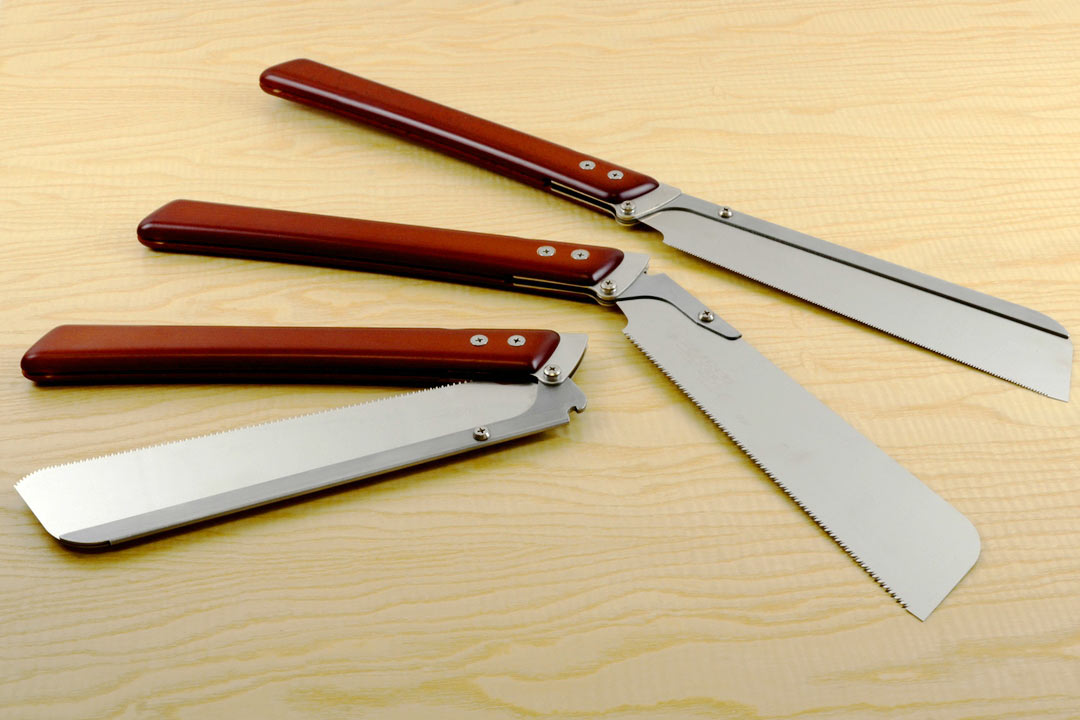
There is a word in Japanese - shokunin - that describes a craftsman wholly dedicated to their work. It carries no equivalent in English, which perhaps says something about the different ways the two cultures have approached making things. And yet the history of hand tools suggests that East and West have always had more to learn from each other than either tradition tends to acknowledge.
The santoku is the obvious example. When Japanese knifemakers in the 1940s looked carefully at European blade design and asked what it might offer their own tradition, the result was a knife that has since found its way into virtually every kitchen in the world. Gyokucho - the company behind the replaceable blade Japanese saw, which they introduced in the 1970s - appear to have had something similar in mind when they developed the Fugaku folding saw range. Having spent some time with these saws, I think the comparison is well earned.
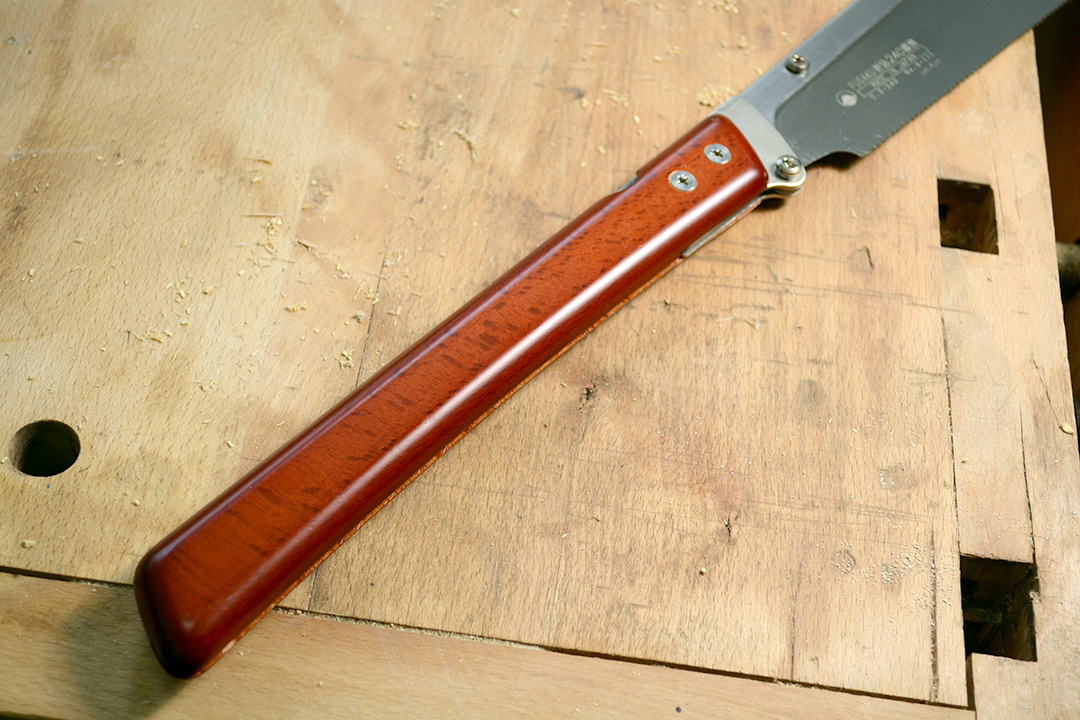
The handles are made from quartersawn beech, the same material that English backsaw makers have reached for over centuries. Quartersawing is a deliberate choice: the cut orientation produces a board that moves less with changes in humidity and, as a welcome bonus, catches the light in a way that reveals the medullary rays - the characteristic fleck that gives the timber much of its beauty. It is a material that rewards both use and attention, which is presumably why it appeals as much to a Japanese manufacturer as it did to the craftsmen of Sheffield and Disston.
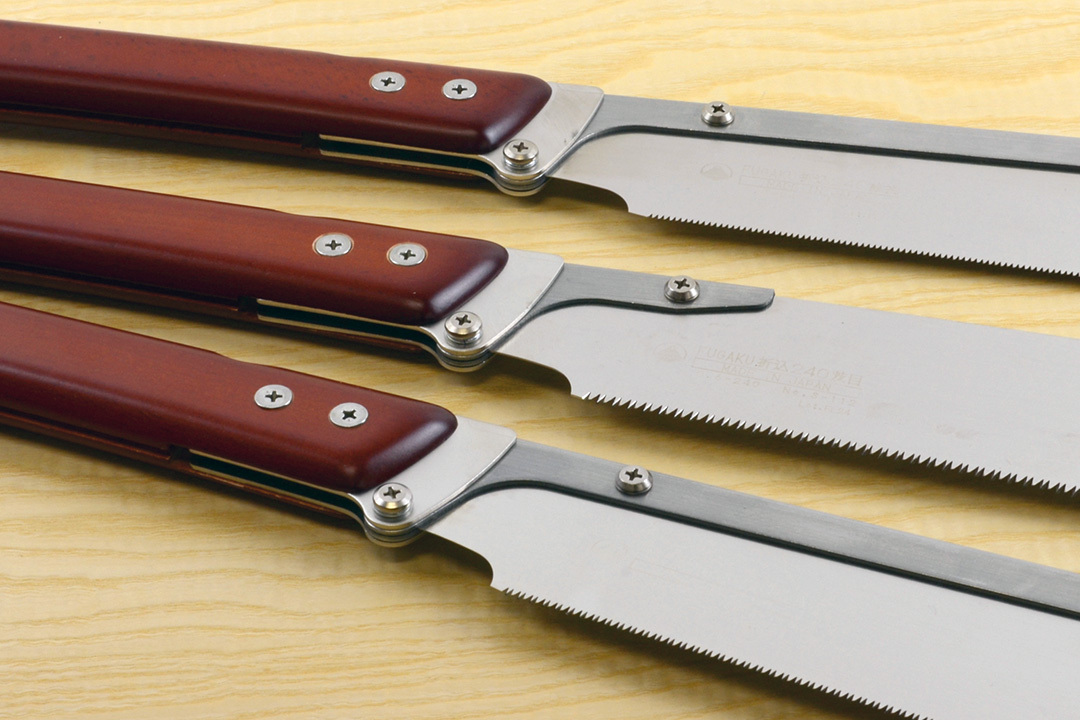
Western backsaws carry their weight with intention. The spine is not simply structural; it is part of the cutting technique. A well-made backsaw sits in the cut with a presence that the sawyer can either lean into or resist, modulating the cut through the balance of support and release rather than through grip or force alone. Once understood, this is one of the more satisfying things a handsaw can teach you. Gyokucho have carried this principle into the Fugaku by building the spine from a heavier steel pressing than they use on their conventional Japanese saws, and by engineering the folding mechanism to a standard that adds meaningful mass without any sense of excess. The result is a saw that communicates in the way a good western backsaw does - you feel the cut developing under your hand.
The blade side of the equation remains resolutely Japanese. For horizontal sawing, the pull stroke is simply the more logical choice: the blade works in tension, which allows it to be thinner, which in turn means less set and a finer kerf. Gyokucho have selected blade profiles from their existing range that correspond broadly to the three saws most western woodworkers reach for - something fine enough for dovetails, something mid-weight for general carcase work and something with more pace for dimensioning panels.
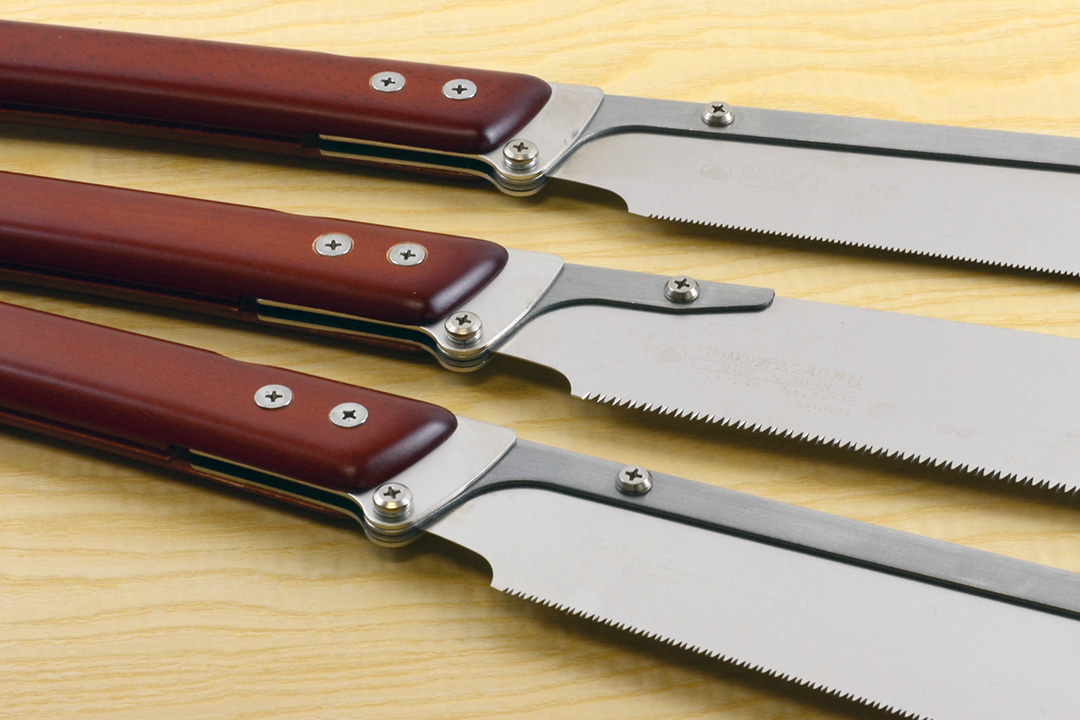
Whether a folding saw can genuinely replace a traditional backsaw in a western workshop is a question worth sitting with, rather than rushing to answer. What the Fugaku range does convincingly is demonstrate that the two traditions share more common ground than their surface differences suggest. For woodworkers who have always worked in one tradition, these saws offer a thoughtful way in to the other.